The international competition program «Way Up» presented the curator’s selection of works by the artists from different countries: Sweden, Germany, Finland, the Philippines, Italy, Lithuania, France, Austria and Russia.
The program took its name from Anna Yermolayeva’s work «Way Up» (2008).
The curator was interested in the whole gamut of various approaches to the festival’s theme, which is why the genres vary from production and documentary to fantasy and flash animation.
The program reflects the contemporary insight of artists into such notions as the universe, divine, soul, freedom.
Struggle for survival, rites and rituals, timeless values and power of the word’s impact, uncharted abandoned territories, fantastic and abstract transformations of the familiar landscape and architecture, optical illusions and the geometry of space-time relations – these are but a few facets of the themes under consideration.
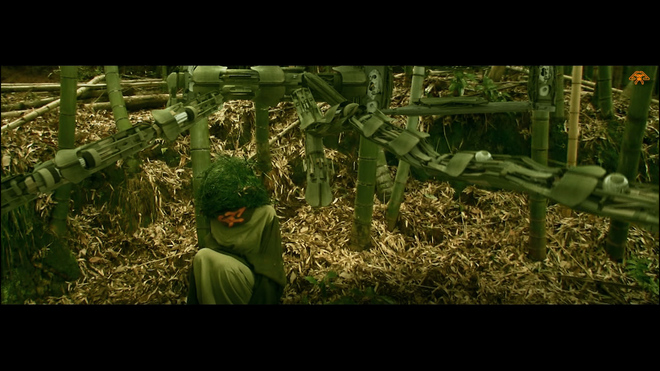
There was a separate demonstration of the experimental model of technologized bamboo forest by video group AUJIK (Sweden-Japan) «A Forest within a Forest» (2010).
The authors are paradoxically certain that nature needs to adapt and exist by the laws of technologies in order to survive. The idea of this work, as it would seem, reflects the best the specifics of the festival that joins art and technologies.
Viktoria Ilyushkina,
CYLAND, curator of video archive
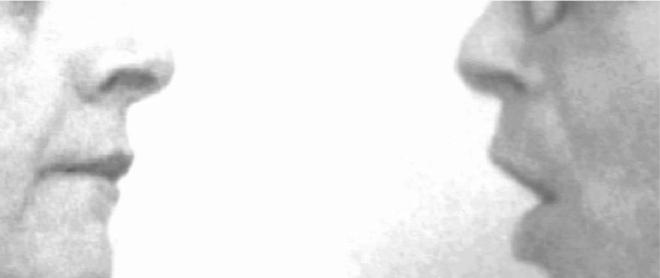
Maria Theresa Sartori (Italy)
Etude Op.25 N.10 in B minor Homage to Chopin. 2011
7’40’’
In this work the artist continues her research about the relation between music and language, investigating the behavioral dynamics in the verbal communication. Using two interlocutors, one aggressive and the other calm, she underlines the duality of attitude in the interaction between two subjects. The work is composed by two specular videos in which the two subjects overturn their own part, by tributing in a mutual way interchangeable their proper role. The strong relation between music and language in its emotional expressivity is established by the piece of Chopin, which if in a way it hides the content of the dialogue, in another it highlights the emotional aspect globally shared.
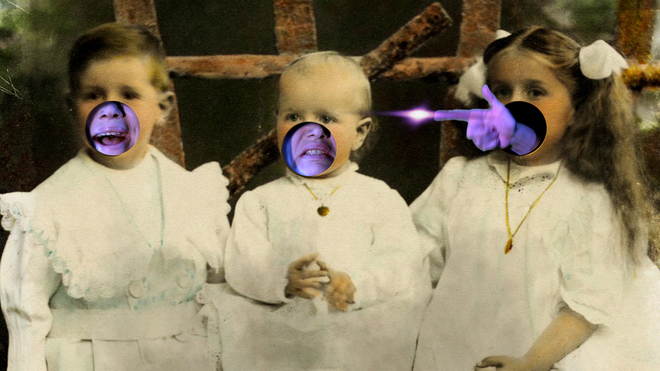
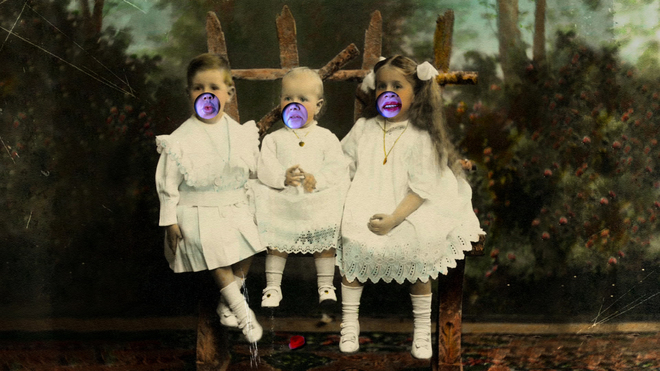
Francesca Fini (Italy)
Liszt. 2012
6’30’’
It is the beginning of the 20th century and three children are posing for a family photo. The children are young pioneers in a colony of Christian immigrants in Jerusalem. This is the point of departure for a digital transformation in which the lower part of my face replaces that of the children, in a reversal of time and meaning crystalized in a non-time and non-meaning. The sense of incommunicableness is obtained by juxtaposing fragments of phrases found on the Internet, in a mash-up that unravels into a contemporary senseless dialogue that reveals how a word not listened to is, consciously or not, violence in its pure state. When there is only the word, one's own, the mouth becomes a weapon.
Anna Jermolaewa (Austria)
The Way Up. 2008
1’00’’
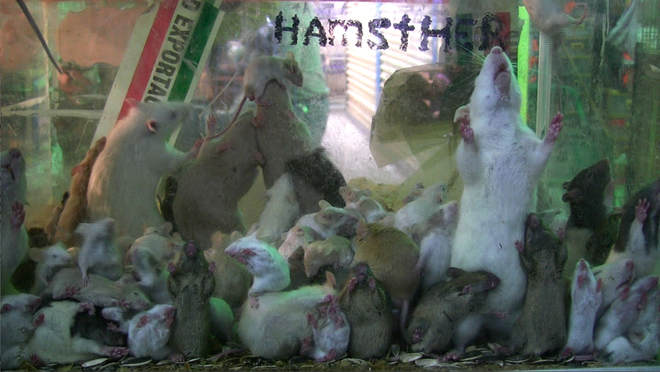
The camera is showing laboratory rats kept in a special box on the pet market in Mexico. The audience observes those rats that became well-known for their special social behavior. How do they behave in a cramped space? They climb one upon the other furiously trying to find way up. They are relentless. This very scene might be interpreted as a struggle for survival in micro world. This social system has no perspectives.
Tina Willgren (Sweden)
The Polymoids. 2010
2’52’’
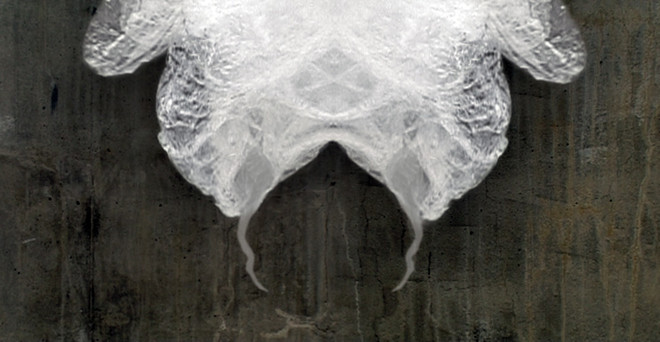
The idea for The Polymoids emerged when visiting vacant urban areas in Stockholm. In the middle of town, surrounded by a hectic city life there exist spots that seem to have escaped city planning. There is an abandoned railway track and pillar landscapes under bridges. Having a very special atmosphere about them, something spooky and unpredictable, distinctly different from the surrounding city emerges. Walking in these areas is like exploring unknown territories, one does not know what will show up behind the next corner. Lots of waste is lying around, sometimes carried away by the wind, and it feels as though a very special type of flora and fauna could develop here, where dead matter comes to life. The video is a kind of a nature documentary, which take this special biotope as its theme.
Joaquin Palencia (Philippines)
Bas-Bas. 2010
5’43’’
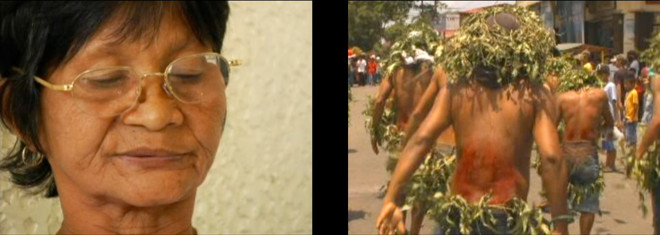
Bas-Bas juxtaposes two main players in the ritualized self-flagellation that is observed during the Lenten Season in the small towns in the Philippines. The singers, mostly womenfolk, recite the agony and death of Christ while the men draw blood in return for favors or the forgiveness of sins.

Rimas Sakalauskas (Lithuania)
Synchronisation. 2011
7’59’’
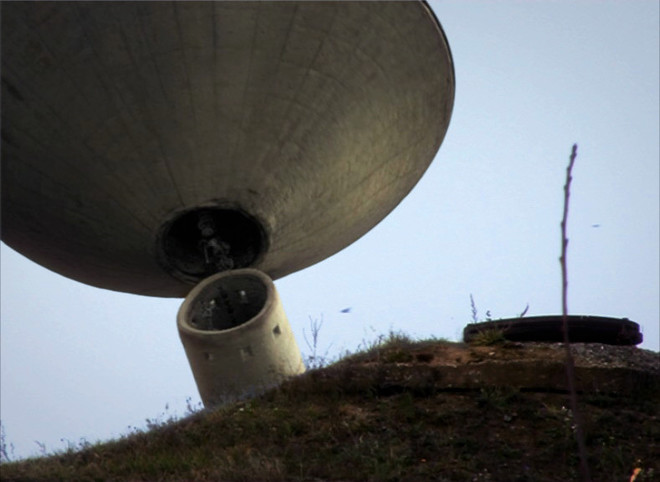
Synchronisation has been compiled from free associations and small impossibilities. The slow tempo and spatial soundtrack give the film a compelling atmosphere and inner logic. Buildings from the Soviet era make the scenes monumental and suggestive.
Heini Aho (Finland)
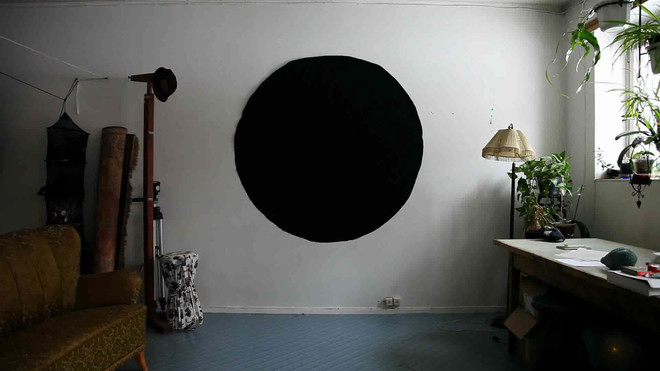
Black Hole. 2010
2’52’’
There is a picture of a room on the video that has a black circle / hole on the wall. Person is throwing black objects and clothes in to the hole. For a moment it seems like the items are disappearing in to the darkness, but instead pulled by the gravity, dropping on the floor.Spatial constructions often open up fully only from a specific angle of viewing, their three-dimensionality flattening into a picture and revealing the hidden narrative of the piece.
Pink Twins (Finland) - Courtesy AV-arkki
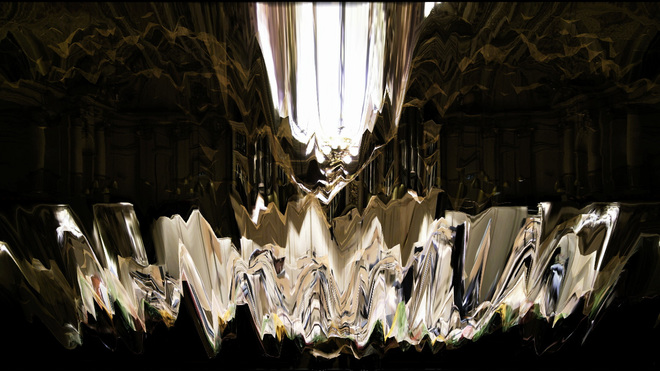
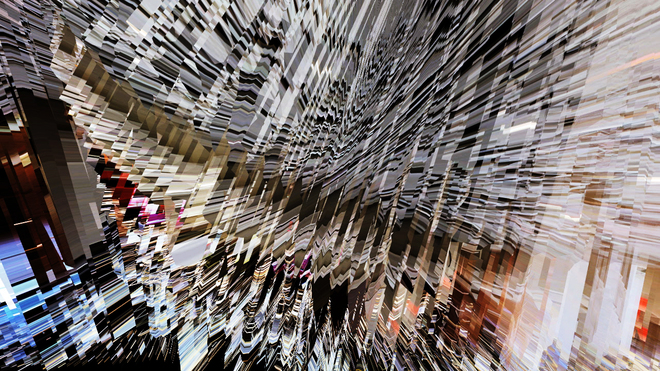
Defenestrator. 2008
8’44’’
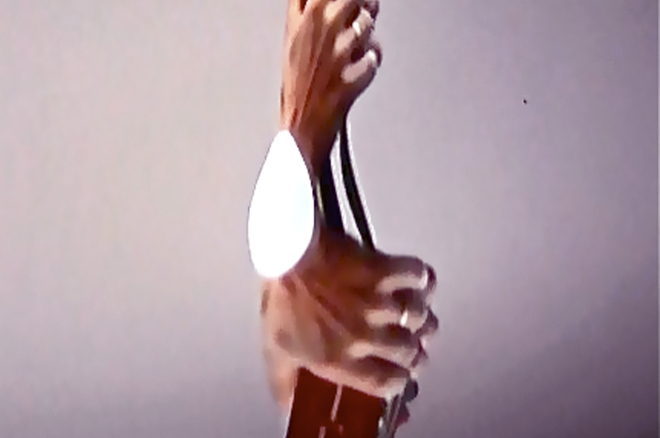
A spectacle of grandiose spaces, monumental halls and majestic architecture. Overpowering architectural constructions disintegrate, deform and transform into a flowing stream of lava, creating new distorted spaces as building blocks of a new order.
Loudwig van Ludens (Germany)
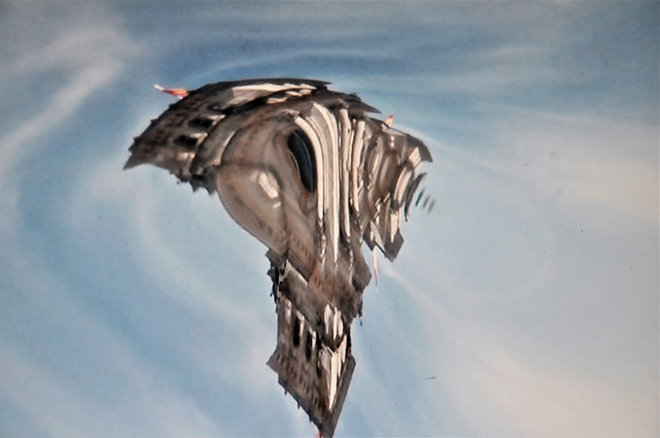
Heil Gott! 2011
2’48’’
The artist was inspired to create this video during Pope Benedict's visit to Berlin, his address to the Jewish Community, his speeches the Reichstag and the Olympic Stadium on September 22, 2011. It's filmed with a mirror installation without any computer-aided processing.
Anssi Kasitonni (Finland)
Masa. 2009
10’49’’
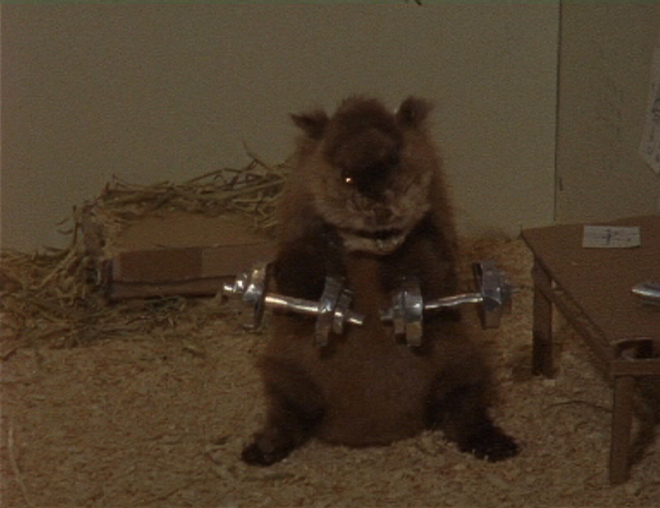
This prison break story combines animation, puppetry and live action. The parallel worlds and scales collide as Masa, a guinea pig yearning for freedom, and his owner go about implementing their own plans. In his nest, the technologically surprisingly advanced and creative pet plots his convoluted getaway plans, which always run into the impenetrable wall of his owner’s love. This movie features electric gadgets, bodybuilding, Steve McQueen and surprisingly long monologues spoken in guinea pig language
Isle Of Lox, Leyla Rodriguez & Cristian Straub (Germany)
The Fruits Electric. 2010
3’46’’
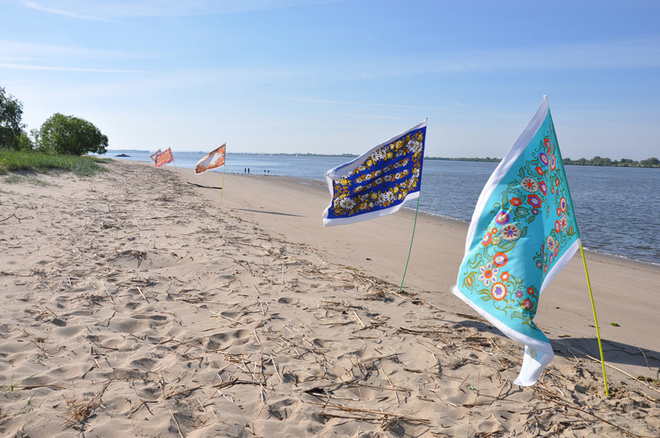
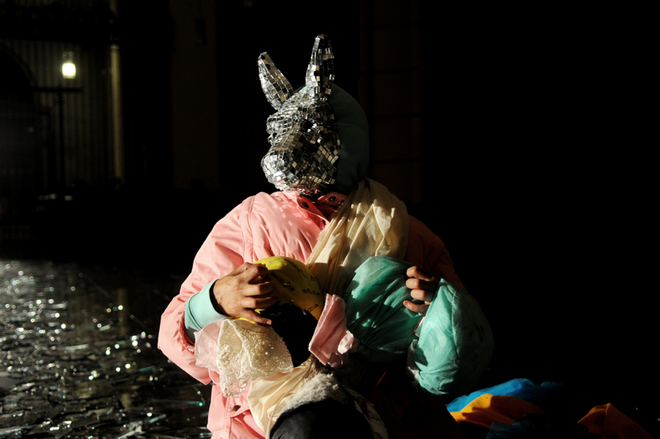
A girl and «The Reflektor» are washed ashore a beach. Strangely attracted by «The Flags» and uncanny sounds, she starts exploring the island she stranded on. When she picks «The Fruits» from «The Tree» of sound she is instantly transposed to a mysterious house — «The Transformer». This is when she becomes aware of her transformation: she is now the keeper of the sound crown, she has become the fruits electric girl.
The Face. 2010
3’54’’
Marks the beginning of the travel mysteries. The coming out, of the black one. Walking on water. Mirror, mirror on the wall. FACE. Wall on the mirror, mirror. Water on the Walking. One blacks out of the coming. Mysteries travel to the beginning, marks « The Face» .
TOTART, Natalia Abalakova & Anatoliy Zhigalov (Russia)
Masada. 2010
3’47’’
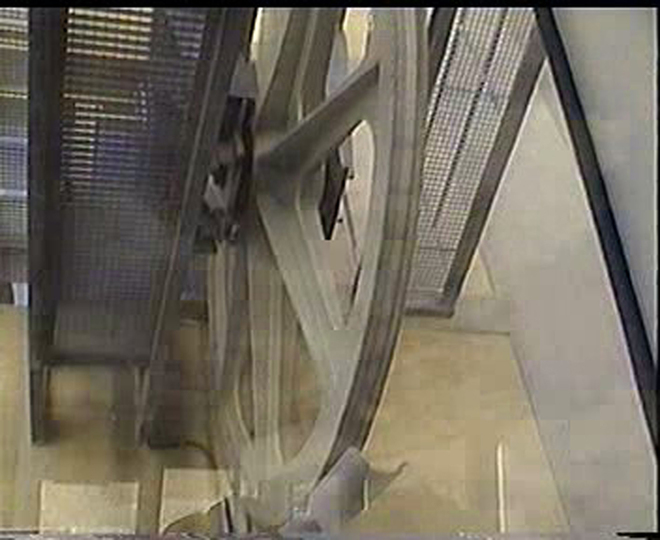
The word and the image in this video take the form of a self-developing structure, an ironic avant-garde utopia, through the debris of which one could find the light path of peace. The tragic events of the last days of the fortress make it a symbol of Jewish heroism and not least a symbol of any struggle for freedom and independence.
Hakeem b (France)
Shoot the Moon. 2010
6’38’’
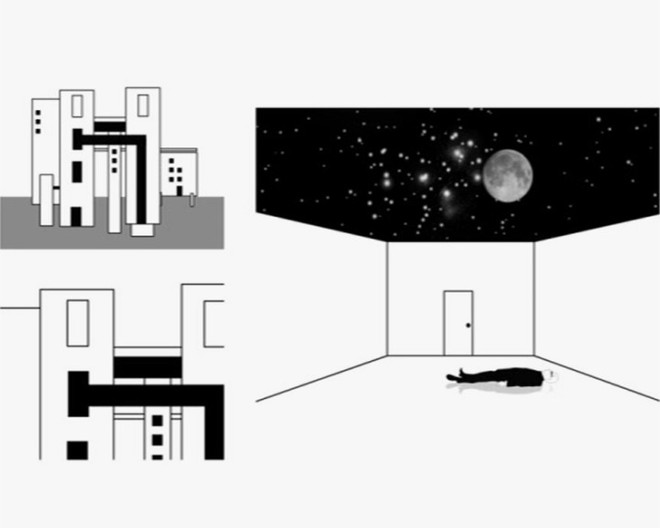
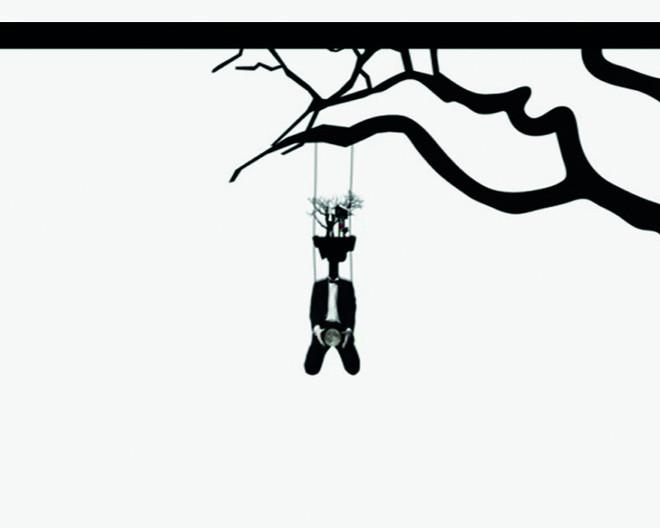
Shoot the Moon is a video animation produced as a narrative naive story. This work is a part of long series of videos, where Hakeem b tries to create images with various ways of production: motion captured, keylighted, realtime or processed. The artist is interested in questions regarding production of the images in the 21 century: its composition, geometry, timing and spacing. Shoot the Moon was his first step towards the abstraction in the works.
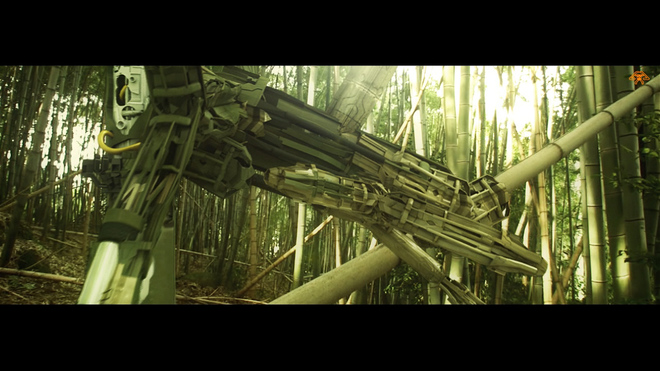
AUJIK, Stefan Larsson (Sweden) - Courtesy Filmform
A Forest Within A Forest. 2010
5’10’’
A guide named Nashi narrates the audience the journey in an uncanny forest. What are the creatures that live there, living beings or robots? Artist proclaims that that nature should adapt to technology in order to survive.